Mobile App Development
Android and iOS, from one codebase where it makes sense.
Native and cross-platform apps, built so the second platform is not a second project. Store submission, review handling and post-launch updates included rather than quoted separately.
Performance budget agreed before the first line of code
How we think about it
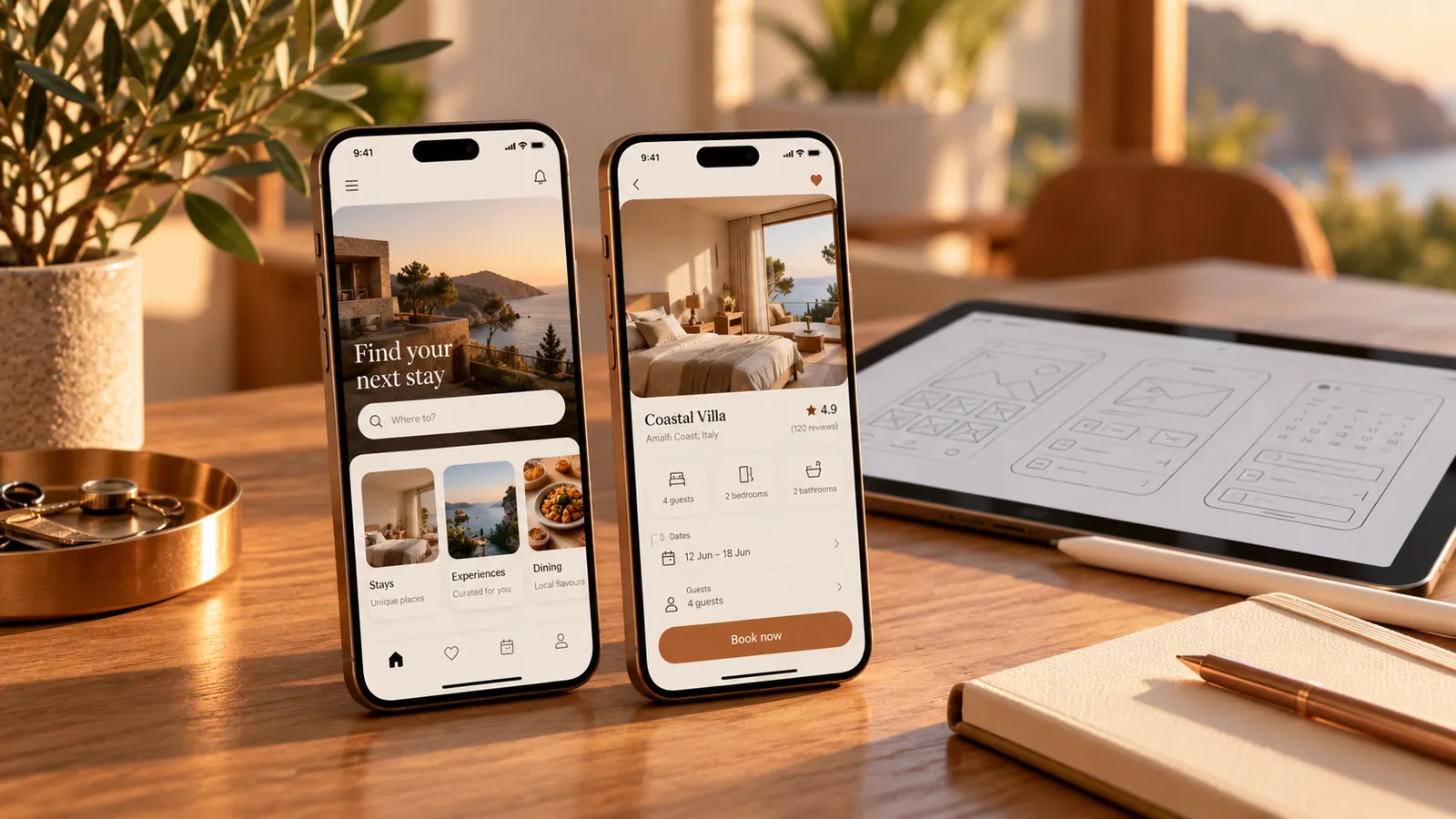
Most businesses asking for an app need a fast mobile site and a home-screen icon. We will tell you when that is the case, because the honest version saves you a year and most of the budget. When you genuinely need native — offline work, push, camera, hardware, background location — one React Native codebase covers both stores without paying for two teams.
The app and the marketing site usually share an API and a design system — built together here, rather than reconciled across two agencies after launch.
What this covers
The work, specifically.
- 01
Cross-platform (Flutter, React Native)
One codebase for both stores when the app does not need platform-specific hardware access.
- 02
Native Android and iOS
When performance, hardware or platform APIs make native the honest answer.
- 03
Store submission
Listings, screenshots, review responses and the rejections that happen to everyone.
- 04
AI features inside apps
On-device and API-backed AI where it genuinely helps, not because it is expected.
- 05
Maintenance and updates
OS updates break apps every year. A retainer means that is handled before your users notice.
Need Mobile App Development for something specific?
Tell us what you're trying to ship and we'll say plainly whether this is the right service for it — including when the answer is no.
How it runs
The same four steps, whatever we're building.
No account-manager relay. The lead on your project is someone who builds, and they stay on it from the first call to the last deploy.
Scope
A week of hard questions. We map what you actually need and say plainly which parts we'd cut.
Prototype
Something real in front of you early, not a document about it. Opinions get cheaper.
Build
Two-week cycles, a demo at the end of each. You see progress, not status reports.
Hand over
Documentation, a walkthrough, and the keys. Support if you want it — never as a hostage.
Questions
The things people ask before they enquire.
It depends on scope, but we will give you a number before you commit to anything. Most engagements start with a paid discovery — a fixed fee, a week or two — which ends in a written scope and a real budget. If the budget does not work, you leave with the scope document and no obligation to continue.
A typical first ship is around six weeks. Larger builds run in two-week cycles after that, each ending in a demo of something that actually runs. You will know within the first cycle whether the timeline is holding, rather than finding out near the deadline.
The people you meet. The lead on your project is someone who builds, and they stay on it from the first call to the last deploy. There is no account manager relaying messages between you and an unseen team.
You own everything — code, assets, accounts, domains. We hand over with documentation and a walkthrough, and your team can run it without calling us. If you would rather we stayed on for maintenance or a next phase, that is a separate agreement, not something buried in the original contract.
Yes. Most of our work is remote, and we keep a few hours of overlap with your working day for calls. Timezone has not been the hard part; unclear scope has.
Where it meets the others